Two Gates, One Field and the Art of the Three-Point Turn at HT FC
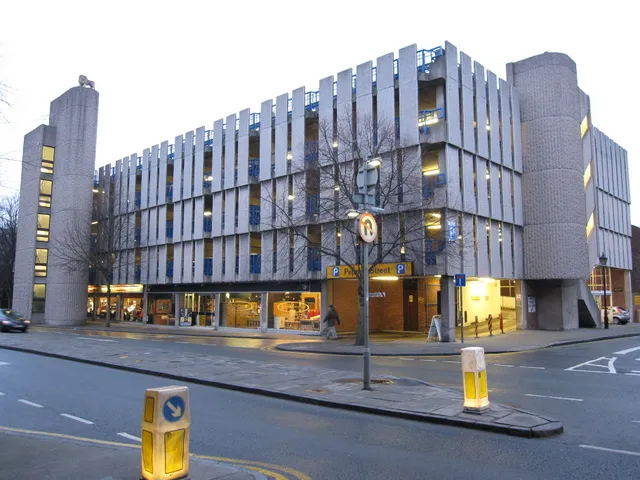
Photo: John S Turner, CC BY-SA 2.0, via Wikimedia Commons
At 1:15 on a Saturday, the HT FC car park is a wide, empty expanse of tarmac with a suspicious dip near the far corner and one gate open. By 2:15 it is a fully choreographed operation involving 60 cars, a minibus, two gates, three marshals in hi-vis and a tea queue that reaches the touchline halfway through the warm-up. Somewhere in the middle of all that is a volunteer in a fluorescent jacket waving you into a space you were certain you could not fit into.
Parking is not usually part of a football club's story. At a grassroots club, it absolutely is. It is the first thing a visitor experiences and the last thing they grumble about, and it involves more diplomacy per square metre than anything else on the site.
1:15pm: The First Marshal Arrives
The first marshal is usually on site before the players. The job starts with a walk-round: checking the gate mechanism that sticks in cold weather, moving the cones that mark out the accessible bays, and deciding whether the overflow field is usable. If it has rained heavily in the preceding 48 hours, it is not — and that single call shapes the whole afternoon.
"You can tell by ten past one what kind of day it's going to be," says one of the regulars, who has been doing the gate for six seasons. "If the away coach is early, you're fine. If it's late and the car park's already half full, you've got a problem you can't solve. You just manage it."
Two Gates, One Way In
The main gate takes traffic in. The second gate, at the far end, is exit only — except when it is not, which is the source of roughly 80 per cent of matchday parking drama.
The system is simple in theory. Cars arrive, are directed to a row, and are parked nose-out where possible so nobody has to reverse blind into a moving line of vehicles. In practice, the rows fill from the front, the far corner gets muddy, and the temptation to squeeze a seventh car into a space designed for six is overwhelming for roughly one driver per week.
The marshals' rule is blunt and gently enforced: if you are asked to move, move. Nobody is being picked on. The row has a number and the number is fixed.
The Overflow Field Rules
Most weeks, the field beyond the second gate stays shut. On the busy ones — a cup tie, a derby, a parent-and-child double-header — it opens and roughly 20 extra cars disappear onto grass.
The conditions are non-negotiable. No parking on the field after sustained rain, because a rutted pitch takes until March to forgive you. No parking on the far verge at all, because the verge is not a car park and the parish council has said so in writing. And no driving across the marked-out training area, even if it looks like a shortcut, because it is not.
Visitors are not expected to know any of this. That is what the hi-vis is for.
Etiquette for a Tight Squeeze
There is an unwritten code to an HT FC car park, and it is mostly about not making someone else's afternoon harder.
- Arrive early if you can. Twenty minutes changes everything. The 2:20 arrival is the one that ends up in the awkward gap near the gate hut.
- Take the space you are given. The marshals can see the whole car park and you can see the windscreen in front of you.
- Leave the accessible bays alone. They are marked for a reason and there are two of them.
- Do not block the tea hut side. The gap by the hatch is a walkway, not a lay-by, and the queue will let you know.
- Reverse in if you are asked. It looks like fuss. It saves ten minutes at full-time.
- Say thanks on the way out. It costs nothing and the volunteer on the gate has been stood there since quarter past one.
The away minibus gets the wide slot by the second gate, because it always has and because trying to turn a minibus in a full car park at 4:55 is the sort of thing that ends up in a committee meeting.
The Half-Time Squeeze
The busiest five minutes of the car park are not before kick-off. They are at half-time, when the tea queue spills backwards past the gate and a handful of people decide this is the moment to move their car.
It is not the moment. The marshals will tell you so, politely, and then a second time less politely. Between 3:45 and 3:55 the priority is keeping a clear route for the medical team's vehicle, and everything else waits.
Full-Time and the Three-Point Turn
The final act is the exit. It is also where the choreography breaks down, because 60 cars parked nose-out by a volunteer at 1:40 have a tendency to be driven by people who would quite like to leave immediately, in any direction.
The three-point turn by the gate hut is a genuine local tradition. So is the near-miss, the wave of apology, the rolled-down window and the two blokes who get out to talk each other through it. It is slow, slightly chaotic and entirely survivable, provided everyone remembers they are on a football club's land and not a ring road.
The marshals stay until the last car is out. That is usually around 5:30, in the dark, with a torch, doing a final check for abandoned cones, lost car keys and the occasional child who has decided the empty car park is a racetrack.
Why It Matters
There are cheaper ways to run a car park than putting three volunteers on the gate for four hours. There are not many friendlier ones. The first conversation a new family has at HT FC is often with a marshal in a hi-vis asking them to swing left and take the space by the fence. That is the club's front door.
So if you are coming down on Saturday, come early, take the space you are given and say ta on the way out. And if you see someone in a fluorescent jacket in the rain at quarter past one, remember they volunteered for this bit. They are the reason your Saturday starts with a decent parking spot rather than a row about one.