Games in Hand, Goal Difference and the Myth of the Must-Win November

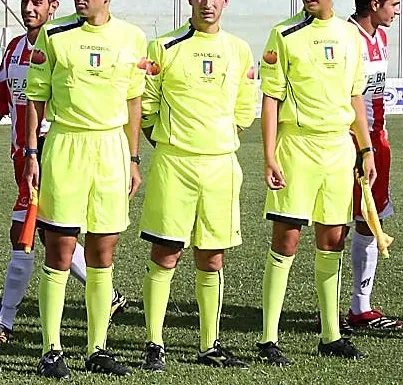
Photo: Sg1959, CC BY-SA 4.0, via Wikimedia Commons
There is a particular kind of panic that sets in around the third Saturday of November. HT FC have dropped four points in three games, a rival has won twice on the spin, and suddenly the league table is being screenshotted, annotated and forwarded around the group chat like a court document. It is worth remembering that in November, the table is not a verdict. It is a sketch.
None of this is an argument against caring about the standings. It is an argument for reading them properly. Here is a plain-English guide to the three numbers that cause most of the confusion — goal difference, points per game and games in hand — and what they actually tell you about a club like HT FC at this stage of a season.
Why the Table Lies in November
A grassroots league table in late autumn is a record of who has played whom, not who is better. With 14 or 15 games gone, most sides in HT FC's division have played between 10 and 13 matches, and the spread is not random. Postponements, county cup commitments and a couple of waterlogged pitches have left some teams two or three fixtures behind.
That means the points column is comparing different amounts of evidence. A team on 22 points from 11 games and a team on 24 points from 14 have very different seasons going on, even though the second one sits above the first in the table. The gap looks like two points. It is really a question about how many matches each club has had to prove itself.
Goal Difference, in Plain English
Goal difference is simply goals scored minus goals conceded. HT FC's current mark of +9 comes from 26 scored and 17 conceded. It exists for one reason: to separate two teams who are level on points.
Where supporters get into trouble is treating goal difference as a currency in its own right. A big positive number is not a cushion you can spend in December. It is a tiebreaker, and it only matters at the precise moment another side matches HT FC's points total.
What goal difference is genuinely useful for is a rough check on whether a points total is flattering. A side sitting third with +2 is probably winning tight games and losing the loose ones. A side sitting third with +18 is more likely to be a genuine threat who has had one heavy defeat. Neither is conclusive — but the number is a useful second opinion on the first.
One small refinement: goal difference per game. Divide by matches played and you get a cleaner comparison between clubs with fixture lists of different lengths. HT FC's +9 from 14 games is 0.64 per game. That is healthy, unspectacular and, for a side that has kept four clean sheets, about right.
Points Per Game Beats Points Alone
If you only look at one number between now and February, make it points per game (PPG). It is simply points divided by matches played, and it does the job of evening out the fixture backlog.
Take a hypothetical. HT FC on 24 points from 14 matches is running at 1.71 PPG. A rival on 22 from 11 is running at 2.00 PPG. The table has HT FC higher. The rate says the rival is, so far, the better side — and has a fixture backlog that could open a real gap rather than a cosmetic one.
Flip it and the same maths works in HT FC's favour. If a promotion rival is sitting on 26 points from 16 games — 1.63 PPG — and HT FC are on 24 from 14, the table shows a two-point deficit that is really a slightly better rate with two matches spare. Same table, completely different mood.
A useful rule of thumb for this level: a PPG of around 1.8 to 2.0 has tended to put sides in the promotion conversation; 1.2 or below means a scrap. Anything in between is a season that will be decided by the winter months.
A Game in Hand Is Not a Point
The most overused phrase in grassroots football is "we've got games in hand". It is technically true and analytically useless on its own, because a game in hand is an opportunity, not a deposit.
Three fixtures in hand could be nine points. It could also be one point, a postponement and a heavy defeat on a gluepot pitch in January. Games in hand are worth whatever the PPG of the team holding them says they are worth — and even then, only if the fixtures actually get played.
There is a second trap here. Congested fixture lists are not neutral. A side three games behind in mid-November will be playing Tuesday-night catch-ups in February, on heavier pitches, with a squad that has work on Monday morning. HT FC's own experience of midweek football is instructive: the results are typically scrappier and the injury list longer. A game in hand is real, but it is not free.
What a Good November Actually Looks Like
The temptation is to call any run of form either a promotion charge or a crisis. The calmer read is to look at three things together: PPG, goal difference per game, and the fixture list ahead.
A genuinely good November for a club like HT FC looks like this — PPG holding steady or improving, goal difference staying in positive territory, no heavy defeats, and results broadly matching the level of the opposition. A false dawn looks like three wins against the bottom three, a narrow loss to a top side, and a fixture list that gets much harder in December.
Neither pattern guarantees anything. That is the point. November tells you which questions your season is asking. It does not answer them.
Reading It Without Overreacting
So next time a Saturday goes badly and the table starts circulating at 5:15, do the boring thing. Check the games played. Check the PPG. Check the goal difference and divide it by the number of matches. Then look at who is next.
It will not make a defeat feel better. But it will stop one result in November from being read as a full season in miniature — and around here, that is a skill worth having.