Flags, Whistles and Fine Margins: Backing HT FC's Volunteer Officials in 2026/27
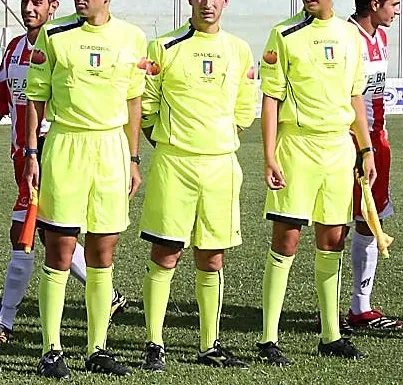
Photo: Iaconianni family, CC BY-SA 3.0, via Wikimedia Commons
There is a moment in every tight HT FC match when the game turns on a flag. A winger goes down the line, the assistant referee sprints to keep up, and the whole touchline holds its breath. The flag goes up. The decision is either obviously right, deeply controversial or — most likely in grassroots football — a genuinely difficult call made by someone who volunteered to be there.
As of November 2026, HT FC's 2026/27 season is already full of those moments. The club is competitive, the matches are close and the officials are not neutral strangers drafted in from nowhere. They are volunteer assistant referees, club linesmen and matchday officials who often have a direct connection to the club. That does not make them biased. It makes their job more complicated.
The shortage is not a rumour
The local referee shortage is real, and it is not just about the men and women in the middle. Clubs are increasingly asked to provide assistant referees and club officials for their own matches. That means a parent, coach or volunteer gives up the chance to watch the game from a comfortable spot and instead runs the line for ninety minutes, often in the cold, often while being told they have got it wrong by people who are standing still.
At HT FC, that volunteer might be the same person who ran the under-12s session on Thursday, sorted the kit on Friday and is due to help in the tea hut at half-time. They are not professional officials. They are club people doing a job because the alternative is a fixture without enough officials. The respect test starts before the first whistle: do we treat that person as a decision-maker or as an easy target?
What the touchline sees — and what it misses
From the side, an offside call looks simple. From the line, with a fast winger, a moving ball and a defender stepping up, it is a different picture. The volunteer assistant referee has to watch the last defender and the attacker at the same time, judge the moment of the pass and then commit to a flag. There is no slow-motion replay. There is no VAR. There is a person trying to get it right.
One HT FC anecdote from this season sums it up. A junior match was level late on when a through ball sent the opposition clear. The club linesman, a parent who had been asked to help ten minutes before kick-off, kept pace with the play and raised his flag. The decision stood. The opposition bench disagreed loudly. The linesman's own team said nothing. Afterwards, the coach shook his hand and said, thanks for doing that. It was a small moment, but it mattered. The next time the club needs a volunteer, that parent will remember it was not all grief.
The competitive edge problem
Grassroots football is not supposed to be a library. Players compete. Coaches want to win. Supporters react. Nobody is asking for a silence-only touchline or a polite round of applause for every throw-in. The edge is part of the game, and HT FC would not be the same without it.
But there is a difference between competitive noise and personal abuse. Shouting, get up, or, come on, lino, is part of the furniture. Questioning every decision as if the official has a personal grudge is not. Nor is following them to the car park, crowding them at half-time or making a volunteer feel like they have to explain themselves to a committee of parents.
The practical rule is simple: you can disagree with a decision without making it personal. You can groan at a flag without turning the person holding it into the villain. And you can support your team without teaching the players that officials are fair game.
Practical respect guidelines that actually work
HT FC does not need a laminated code of conduct that nobody reads. It needs a few habits that hold up on a wet Saturday.
First, the captain should be the only player who talks to the referee about decisions. That is already a convention in many competitions, and it works. It keeps the dialogue calm and stops a crowd of players surrounding an official who is trying to manage a game.
Second, coaches should set the tone. If the coach shouts at the assistant referee from the technical area, the parents behind them will follow. If the coach thanks the official at full-time, even after a defeat, that also travels.
Third, clubs should make it easy to volunteer. A rota, a quick briefing and a named point of contact take the fear out of running the line. The more people who have done it, the more empathy there is on the touchline.
Fourth, supporters should remember that the person with the flag is not a professional official on a match fee. They are a volunteer. They are allowed to be nervous. They are allowed to get one wrong. They are not allowed to be abused.
Backing officials without losing the edge
There is a version of respect that feels like a lecture, and there is a version that feels like a club. HT FC should aim for the second. That means backing officials publicly, not just in a pre-season statement. It means the committee supports the volunteer who ran the line, even when a decision has gone against the club. It means players shake hands at the end, coaches keep their post-match comments measured and the touchline remembers that the game only happens because somebody said yes to the whistle.
The local referee shortage will not be solved by one club. But a club can make itself part of the solution. Every volunteer who has a decent experience is one more person who might do it again. Every parent who sees an official treated properly is one more parent who might step forward next time.
The flag does not stop the game. It starts the argument. HT FC's job is to make sure that argument stays about football, not about the person holding the flag.